
Introduction
This writing is the first part of a series of essays on Ancient Iran. It is an effort to bring up to date, on a scholarly basis, the book History of Ancient Iran, written by Moshir al-Dowleh (Hasan Pirnia), which was composed more than one hundred years ago.
According to Hasan Pirnia, “ancient Iran, in one of the periods of its existence, was considered the first world empire.”
During the period of Achaemenid rule, Iran was a vast land that encompassed a large portion of the early civilizations; from Central Asia and the Iranian Plateau to Mesopotamia (the land between the Tigris and Euphrates rivers in present-day Iraq), the Levant (the countries of Syria, Lebanon, Jordan, and Palestine), Egypt, and parts of Europe.
In light of the available evidence, it appears that this vast expanse was humanity’s first experience in governing an inclusive assemblage of peoples, languages, races, religions, and diverse cultures.
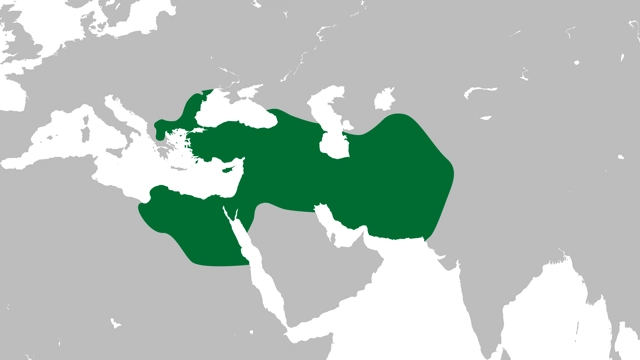
Since Iran has always played a prominent role in ancient Western Asia, it is appropriate first to cast a brief glance at the ancient culture and civilization of this region, and then to turn to the story of Iran.
The World of Early Civilizations
Let us first see which lands were encompassed by the world of early civilizations. If we look from the north, this expanse began in Central Asia and along the southern shores of the Caspian Sea. Then, passing through the Caucasus Mountains, which are a mountainous region between the Black Sea and the Caspian Sea, it reached the shores of the Black Sea and from there extended southward. At its lowest point, this route reached the Persian Gulf and the southern Arabian Peninsula, and finally terminated at the northeastern shores of Africa.
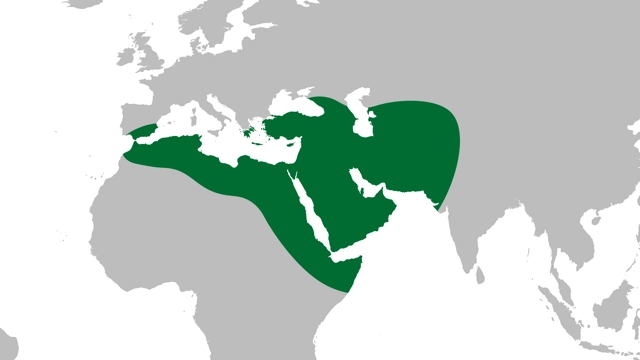
If one looks at this expanse from east to west, it began with the Indus River on the present-day border of India and Pakistan and extended westward to the Strait of Gibraltar, between Morocco and Spain, at the western edge of the Mediterranean Sea. Simply put, the early civilizations of antiquity were spread across a vast area that encompassed the lands of Iran, Iraq, Syria, Turkey, Lebanon, Palestine, Egypt, parts of Arabia, Afghanistan, Pakistan, and even portions of North Africa.
The End of the History of Early Civilizations
But when did the history of early civilizations in antiquity come to an end?
Some believe that the ascendancy of Greek civilization should be considered the boundary marking the end of the history of early civilizations, at the time when the Greeks became the leaders of global culture. According to this group, after the Iranians united the peoples of Western Asia and North Africa in antiquity within the framework of a great empire and confronted Greece, the Greco-Persian wars took shape. These conflicts caused Greek culture gradually to penetrate parts of the eastern lands.
Another group identifies the end of this era with the rise of Alexander of Macedon and his conquests. They argue that with the defeat of the Achaemenid empire, Greek influence came to dominate the early civilizations, and the culture of the early civilizations gave way to Greek culture. However, careful research shows that Greek culture, apart from the coasts of the Aegean Sea—between present-day Turkey and Greece —and parts of the western Mediterranean, was unable to penetrate the core of the early civilizations. The ancient civilizations remained intact, and even Alexander himself and his successors, including the Seleucids, were influenced by the cultures of the early civilizations.
Yet another group regards the emergence of Christianity as the end of the early civilizations. Contrary to this view, however, Christianity was unable to bring the early civilizations of antiquity to a definitive end. Many people adopted this faith, but they did not completely abandon their previous behaviors, traditions, and ways of life, nor did a profound transformation occur in their culture and psyche. The religious and literary writings of that period also confirm this point.
Despite these events, the main question remains: when did the history of early civilizations in antiquity come to an end? The answer closest to reality must be sought in the Muslim conquests. The Muslims converted various peoples who had been the custodians of ancient civilizations to Islam. With the adoption of this religion, parts of long-standing habits, traditions, and beliefs gradually gave way to Islamic culture. In many lands—but not all of them—local languages disappeared, and memory of the past faded. As a result, Arabic language and culture replaced ancient civilizations across a large portion of the early civilizational world.
From this perspective, one may say that the decline of ancient civilizations began with Christianity and came to an end with the spread of Islam.
For this reason, historians usually divide the history of early civilizations into three periods:
The Ancient Period
The Christian Period
The Islamic Period
To clarify this division, one may look at the fate of the peoples who created the great civilizations of Egypt and Babylon. In Egypt, the Coptic language, which was the final stage of that land’s ancient language, gradually lost its status as a spoken language from about the seventeenth century CE onward. In Mesopotamia, too, no trace remains of the civilizations of Sumer and Babylon. The same situation can be observed in Syria and the civilization of the Phoenicians.
However, in Asia Minor (Anatolia)—roughly corresponding to present-day Turkey—as well as in Iran and Central Asia, the influence of Arab culture was far less extensive. The languages of the peoples of these lands were preserved, and many past behaviors and traditions remained intact. The reasons for this difference are varied, and several points may be noted:
Different linguistic roots
The Arabic language belongs to the Semitic language family. Persian and other Iranian languages, including Kurdish, belong to the Indo-European family—the Aryan branch. This fundamental difference in structure and vocabulary prevented Arabic from completely replacing Persian in Iran, unlike in Egypt or the Levant, where the indigenous languages were also Semitic.
Note: The Semitic language family includes languages such as Arabic and Hebrew, and from this perspective, Arabs and Jews are considered distant linguistic relatives.A strong civilizational background
Iran, before Islam, was one of the oldest and most powerful civilizations in the world, with dynasties such as the Achaemenids, Parthians, and Sassanids. This deep cultural and literary heritage created a force of resistance against sweeping transformations.Race and ethnic identity
The people of Iran were mostly of Aryan origin and, unlike the Semitic peoples, regarded themselves as independent and distinct in terms of ancestry and culture. This sense of identity difference unconsciously contributed to resistance against the complete absorption of Arab culture.Geographical and political structure
Iran is a land with diverse geography, mountainous and relatively enclosed. This characteristic helped preserve traditions in different regions. Although Muslim Arabs conquered parts of Sassanian Iran in the seventh century CE, Iran never remained entirely and continuously under the direct rule of the Arab caliphs. After a short time, Iranian-origin dynasties gained local and regional power and, in many cases, enjoyed political or cultural independence.
The Geography of Early Civilizations
From ancient times, civilizations were able to emerge and grow only alongside great rivers, because these rivers not only provided drinking water and the water needed for agricultural lands, but also created the necessary conditions for the formation of states.
Major Riverine Civilizations
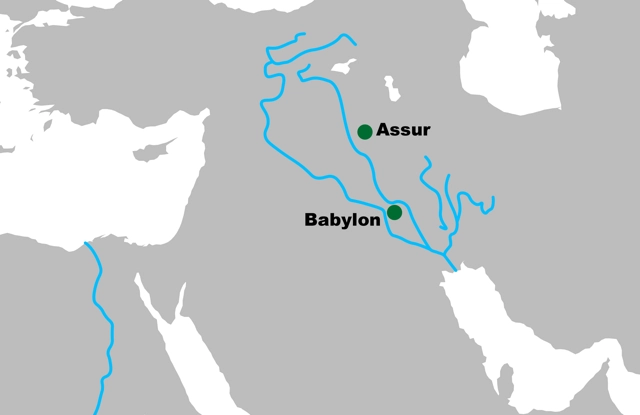
Rivers, in order from right to left: Karun, Karkheh, Tigris, Euphrates, Nile
Rivers of Asia
In Western Asia and the surrounding regions of the great rivers, a dynamic culture emerged, shaped by the Euphrates, the Tigris, and tributaries such as the Karkheh and the Karun. Along these rivers, which functioned like living arteries, the civilizations of Mesopotamia—Babylon and Assyria—grew, giving rise to population concentration and a complex political structure.
The Nile River in Africa
The Nile was not only a source of life, but also transformed the fertile lands around it into the “Black Land,” the name the Egyptians chose for their country, because its black alluvial soil differed from the red soil of the desert. It was upon this foundation that the magnificent civilization of ancient Egypt was nurtured.
The mentioned rivers:
Provided water and fertile land, which formed the basis of agriculture, survival, and the accumulation of resources.
Served as routes of communication and transport, facilitating connections between cities, trade, and cultural expansion.
Required centralized management to control floods. For this reason, governmental institutions emerged to organize water management and agriculture.
In Egypt, fluctuations in the level of the Nile were decisive: if the water level fell, drought and famine ensued, and if it rose too high, floods and destruction occurred.
But in the land of Babylon, another danger also threatened the people. The plain between the Tigris and the Euphrates was so low and flat that it easily turned into extensive marshes. In such conditions, neither agriculture nor life in the damp and unhealthy air of these marshes was possible.
For this reason, the people of this land had to control the flow of the two rivers and convey it to more distant and higher areas. By digging numerous canals and channels, they drained the marshy lands and created basins to retain and regulate the water. These undertakings were possible only when all inhabitants worked together, and this condition was met when a powerful state had been established there. This indeed occurred; for we see that from early times, absolute monarchies arose in these lands. Whenever a strong state came to power in these regions, it devoted its foremost attention to irrigation. It was these construction works that made the land of Babylon so outstanding, in terms of prosperity, population density, and soil fertility, that foreign travelers such as Greeks and Romans regarded it as a paradise.
The Egyptians followed the course of the Nile, moved southward, and extended their civilization among the Nubians (northern Sudan and southern present-day Egypt), the Abyssinians (Ethiopia and parts of present-day Eritrea), and the peoples of Sudan. Even in the early centuries of the Common Era, numerous signs of Egyptian civilization can be seen in these regions. The presence of the Egyptians in these areas was based above all on economic needs and the exploitation of natural resources; the mines of Nubia, the forests rich in animals and birds, and the pastures of the upper reaches of the Nile drew the Egyptians to these lands.
In Babylon as well, livelihood needs drove people toward distant lands. But whereas the Egyptians went south, the Babylonians turned westward; for in their land there were neither forests nor stone for construction. Thus their movement was toward Arabia, the Sinai Desert (northeastern Egypt), the mountains of Lebanon, and regions that later came to be called Phoenicia.
Between these two civilizational spheres—namely Egypt and Babylon—the great Arabian Desert, the southern deserts of Syria, and the Mediterranean Sea formed barriers. These two civilizations, which may have arisen from a common origin, had no contact with one another for a long time, and each developed separately and brought territories under its control. In this desert region—which acted as an obstacle between the two civilizations—a powerful state did not arise, because Syria, due to its mountainous nature, was divided into various parts; there was neither a river to connect these areas nor routes to establish communication among them. Groups from east and west had taken refuge in these lands. After settling in the new territory, since they had no ethnic ties, and commercial rivalry existed among them, they were unable to create a unified state.
Note: In the author’s opinion, it appears that the disorders of Syria in the modern era are also, at least to some extent, a continuation of that ancient fragmentation and the lack of firm ethnic and social bonds among the inhabitants of this land.
As we see in history, the Phoenician cities on the eastern Mediterranean coast, such as Beirut, Tyre, and Sidon, were constantly in conflict, and since they could not expand into other parts of Syria, they moved westward and settled on Mediterranean islands such as Cyprus, Sicily, Malta, Sardinia, and other regions, as well as along the coasts of that sea, such as Carthage and Spain. For this reason, the small population of Syria lived in a scattered manner and entered the stage of history much later than the Babylonians and the Egyptians. At first, these regions came under Babylonian influence, and afterward, with the arrival of Egypt in these lands, they were to some extent affected by Egyptian civilization.
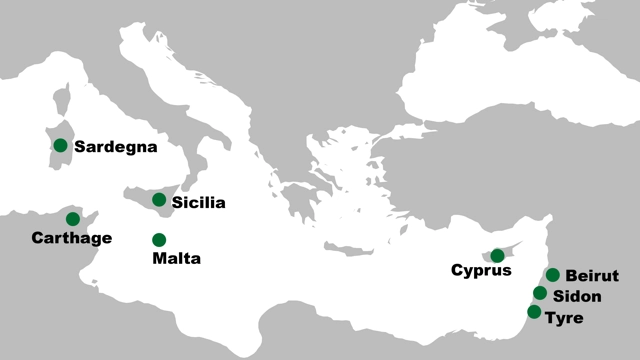
It must be understood that the geographical position of Syria, which lay between two powerful civilizations, compelled it to absorb the culture of its neighbors and blend it with its own. On the other hand, the eastern shores of the Mediterranean enabled it to combine the cultural heritage it had received and transmit it westward. It was through this process that the early civilizations—not only the Babylonian or the Egyptian—moved toward the West.
As history shows, this cultural current extended as far as the shores of the Atlantic Ocean and, by way of Carthage, near present-day Tunisia, which was among the Phoenician colonies, reached lands such as Numidia (modern Algeria) and Mauretania (modern Morocco). Then, in later periods, it penetrated into parts of Africa that are today known as Guinea.
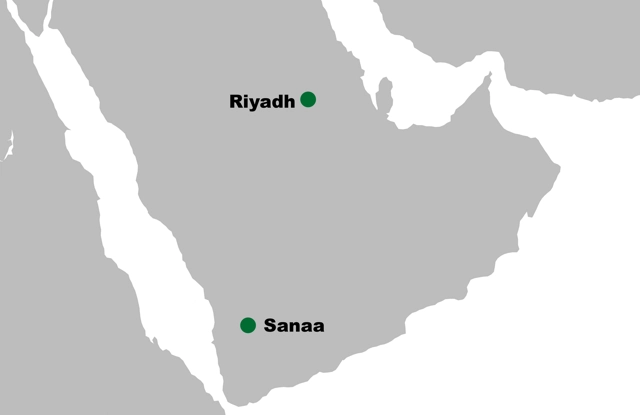
In the Arabian Peninsula, however, which was enclosed by seas on three sides, there lived peoples, most of whom belonged to the Semitic language family. This land, although vast, was able to provide a setting for the flourishing of civilization only in two regions, Najd in the center, including present-day Riyadh, and Yemen in the southwest. The other parts of Arabia consisted largely of deserts and dry lands and were regarded as the dwelling place of nomadic peoples.
These nomadic peoples would, from time to time, move northward and penetrate more fertile lands such as Babylonia and Syria, bringing them under their domination. Containing these waves of migration was possible only if a powerful government ruled over the entirety of Arabia and established stability by settling large populations there. In ancient times, Arabia, with its arid and harsh expanse, was a land ill-suited to sedentary life. Most of it was covered by scorching deserts, barren plains, and impassable mountains. There were neither flowing rivers nor stable sources of water, and for this reason, agriculture and urban life were possible only in limited areas. Difficult routes and the lack of communication roads made control and governance over this vast territory extremely difficult for any power.
On the other hand, unlike lands such as Mesopotamia or Egypt, which by virtue of their rivers and natural resources attracted the attention of great powers, Arabia had nothing to offer: no fertile land, no notable mines, and no sufficient water. For this reason, no powerful state contemplated its complete conquest, since the cost of administering it exceeded any benefit that might be gained from it.
In addition to these factors, the social structure of Arabia itself constituted another obstacle. The inhabitants of this land mostly lived as nomadic and scattered tribes. They were accustomed to their independence and were distrustful of and resistant to external domination. Unity among the tribes, even when it occurred, was temporary and unstable, since each tribe pursued its own interests and accepted no authority other than that of its own elder. This political and cultural fragmentation blocked any effort to unify Arabia.
The Races of the Peoples of the Early Civilizations
The Sons of Shem and Ham
The Torah (the sacred scripture of the Jews) is among the oldest sources to classify the peoples surrounding the Jews within the triad of “Shem,” “Ham,” and “Japheth,” the sons of Noah. This classification was not based on language in the modern scientific sense, but rather drew primarily on genealogical traditions, a geographical outlook, and the cultural perceptions of its own time. For example, the Babylonians were placed within the branch of Ham, despite the fact that their language was Semitic. This inconsistency shows that the aim of this classification was not linguistic precision. Overall, the Torah undertook the ordering of the surrounding world from a narrative and symbolic perspective, not through a scientific or linguistic approach.
Modern linguistics, by contrast, relies not on race, but on linguistic analysis, syntactic structure, morphological systems, and shared lexical roots—an approach that is more precise and data-based. Even so, limitations such as the language shift within a population (for example, Copts speaking Arabic without being Semitic) demonstrate that no single criterion can be applied to all cases.
In contemporary studies, the Semitic languages are placed in the Semitic branch of the larger Afroasiatic family. Groups such as the Babylonians (southern modern Iraq), the Assyrians (northern modern Iraq), the Canaanites (modern Palestine and Lebanon), the Arameans (modern Syria and Jordan), the Chaldeans (southern modern Iraq), the Jews, and the Arabs (including migrants to Abyssinia) belong to this category.
The “Hamitic” group likewise includes several African branches of this family, such as the Egyptians (the Copts). From the perspective of structure and vocabulary, this branch has a weaker connection with the Semitic peoples.
The fundamental question that then arises is whether the Semites were the conquerors of Babylonia and the founders of the first human civilization. Were the Semites the first to seize Babylonia and the Levant, or had a magnificent civilization already been established in Western Asia before them?
In light of documentary evidence and linguistic discoveries, it has become clear that cuneiform script was initially created for non-Semitic languages (such as Sumerian) and was later adopted by the Semites. Moreover, evidence shows that Babylonian and Assyrian kings regarded themselves as successors to the kings of Sumer and Akkad (a historical city and region in Mesopotamia). Hammurabi (the great king of Babylon and the author of the famous Code of Hammurabi) was the first to use such a title. Research indicates that in Babylonia, there were distinctions between Sumerians and Semites, both linguistically and physically. In view of the points mentioned, it can be concluded that the Sumerians first established civilization in southern Mesopotamia, and that the Semites later entered these regions and formed the Babylonian and Assyrian states.
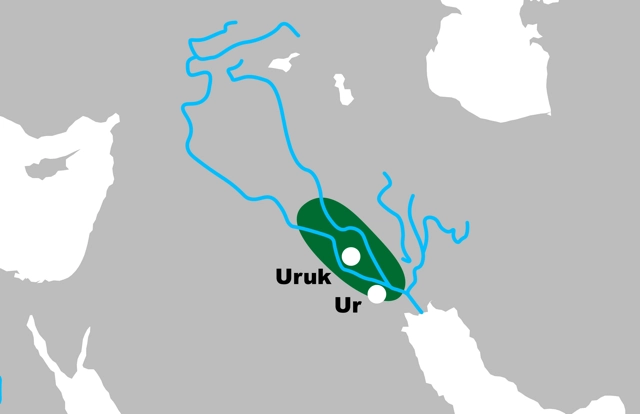
Migration of the descendants of Shem to Egypt
Linguistic research shows that the Semitic languages and the Egyptian language are both affiliated with a larger linguistic family known as Afro-Asiatic. For this reason, similarities can be observed among these languages in their structure and in certain vocabulary items. On the other hand, archaeological and genetic findings indicate that in various periods, Semitic-speaking peoples were among the groups that gradually and peacefully entered Egypt. These movements took place in the form of small groups rather than as an invasion or a large-scale migration.
Genetic studies also show that the people of ancient Egypt were a mixture of populations from North Africa and Western Asia, especially from the regions of the Levant and Mesopotamia. Over time, these groups lived alongside one another, intermingled, and gradually formed an integrated society with a shared identity.
Migration of the descendants of Shem to Elam
The civilization of Elam was an ancient civilization that predated the Iranians (Aryans) and was located in what is now southwestern Iran. This region roughly corresponded to the areas of the present-day provinces of Khuzestan and Ilam and also included part of what is now southern Iraq.
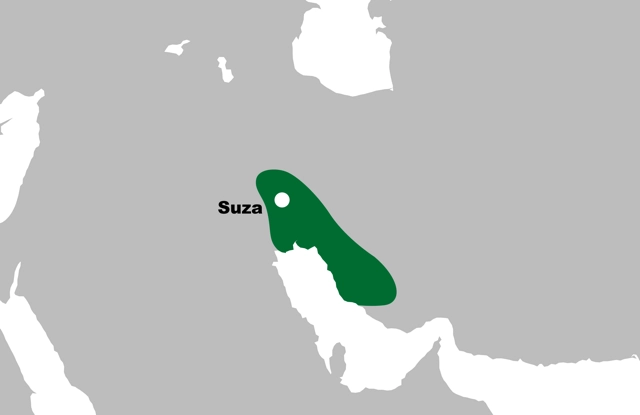
As a result of archaeological excavations in the city of Susa, clear evidence has been obtained of the presence of Semitic peoples—especially Akkadian speakers—in the land of Elam. These indications primarily appear in administrative documents and clay tablets, testifying to the political and economic connections between Elam and the lands of Mesopotamia. Nevertheless, this presence does not imply a demographic predominance of Semites in Elam; rather, it reflects their administrative and cultural influence.
Even the name “Elam” itself has a Semitic origin and was applied to this land from outside. In early periods, up to around 2400 BCE, the Semitic language and script were widely used alongside the native Elamite language in official documents and the administrative apparatus. Over time, however, the Elamite language gained a more prominent position and became the principal language of documentation. This language continued to be used in the writing of official texts until about 500 BCE, especially during the Achaemenid period.
Despite this gradual shift in the written language, Semitic cultural influence within Elamite governing structures remained evident. The Elamite peoples, while preserving their linguistic identity, absorbed many elements of Semitic civilization—particularly the use of cuneiform script and administrative models—into their political and religious systems. In this way, Elam became one of the most notable examples of linguistic and civilizational integration in ancient West Asia, a land in which the native language and Semitic influence established a durable coexistence.
Note: Cuneiform script first emerged in Sumer but entered Elam through the Semitic peoples.
The Northern Peoples of Early Civilizations
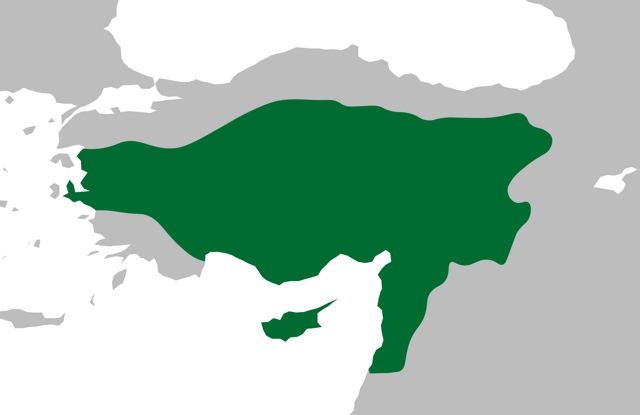
The “northern peoples” in early civilizations are meant, first and foremost, groups who resided in Asia Minor, or Anatolia, in what is now western Turkey. According to evidence from ancient Egypt and the Torah, the Hittites are the most prominent representatives of this group. Herodotus (the first Greek historian) referred to the northern peoples as the “Alarodians.” Cuneiform inscriptions from the Hittite period have been discovered in Egypt, in what is now northern Turkey, as well as remains in present-day Van and Armenia. Until about 1200 BCE, the Hittite state in Asia Minor and the Aramaean states and tribes in Syria and northern Mesopotamia were present. With the collapse of the Late Bronze Age order, the Hittite state disappeared, but the Aramaeans gradually gained power and established new states in the Levant. These developments were the result of widespread political and economic crises.
Aryan Peoples
On the grassland plains of Eurasia, north of the Caspian Sea and in the lands of what are now southern Russia and Kazakhstan, groups of nomads lived in the second millennium BCE. A portion of these peoples, who later spoke Indo-Iranian languages, came to be known in their own writings by the name “Aryan.” Relying on new techniques of horsemanship, light chariots with spoked wheels, and novel methods of warfare, they gradually set out toward the south and east.
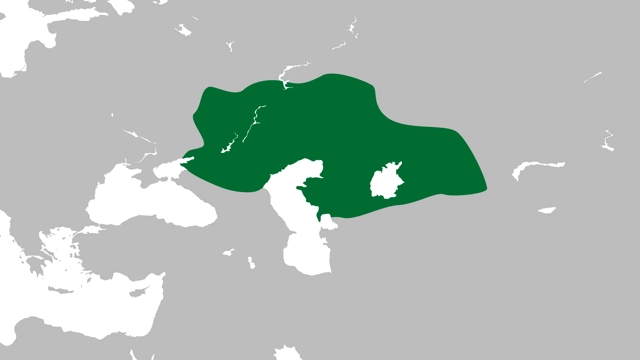
The term “Arya,” in its ancient usage, carried a cultural and linguistic meaning and was applied to peoples who shared language, religious practice, and cultural traditions. Its meaning was generally “noble,” “freeborn,” or “of good lineage,” and in Avestan and Old Persian texts, this meaning was not tied to a racial concept. Later in Europe, this term acquired a racial connotation that was not consistent with scholarly contexts.
The word “Arya” later, in the Parthian period, appears in forms such as Aryān, and in the Sasanian period as Ērān and Ērānšahr. This word was transformed into “Iran” in New Persian. It may thus be understood that the word “Iran” means “the land of the noble-born.”
Note: The Persian language is divided into three periods:
Old Persian: the official and inscriptional language of the Achaemenid period.
Middle Persian or Pahlavi: the language of the Parthian and Sasanian periods. “Pahlavi” was originally the name of the script and the written tradition of Persian in this period, but in practice it is also used for the language itself.
New Persian: it acquired its written and literary form in the early centuries after the arrival of the Muslims. Today, Persian speakers speak New Persian.
In archaeological and linguistic studies, the earliest contact of the Aryans with settled civilizations is observed in Central Asia, a region extending between China in the east and the Caspian Sea in the west. Between approximately 1800 and 1600 BCE, these peoples reached the valleys of the Amu Darya and the Murghab rivers, and through contact with indigenous cultures underwent transformations. From this encounter, in the late Bronze Age, a new culture known as “Yaz” emerged, which, with its handmade pottery, distinctive geometric designs, fortress-like settlements, and irrigation systems, demonstrates the characteristics of a newly sedentary way of life.
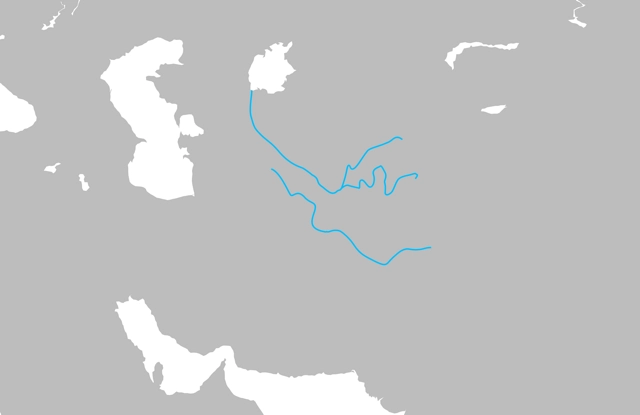
Along the same historical current, a portion of the Aryans set out along the route of the Iranian Plateau. Their movement did not take the form of military invasions, but occurred as gradual and dispersed migrations. Evidence obtained from the Second and Third Iron Ages, especially in northwestern and central Iran, indicates transformations in funerary traditions and ceramic production techniques—signs that point to the presence and influence of these nomadic groups. These changes represent the gradual penetration of Iranian-speaking peoples into the cultural fabric of the Iranian Plateau over the course of several centuries before the Common Era.
Conclusion
From what scholars, on the basis of archaeological evidence and ancient texts, have concluded regarding the races inhabiting the earliest civilizations, it appears that the civilization of this region was formed from six principal ethnic groups: the Sumerians, the Semites, the Hamites, the Elamites, the Hittites, and the Aryans.
The Semites and the Hamites arose from southern regions and gradually brought lands such as Syria, Mesopotamia, and North Africa under their influence. At the same time, the Hittites moved southward from the north and entered into confrontation and conflict with the southern peoples along the northern borders of Syria. In Western Asia, ancient civilizations such as the Sumerian and the Elamite already existed prior to the arrival of these migrants. The Elamites, whose origin some studies trace to the Far East, adopted the Babylonian civilization and extended it toward the eastern regions of the area.
The Aryans likewise entered Western Asia from the north in a dispersed manner and in several waves of migration, and gradually came under the influence of the culture and civilizational organization of Babylon. Over time, and following the rise to power of this newly arrived element, the conditions were prepared for the formation of a comprehensive state throughout Western Asia; a state that reached its height with the leadership of the Medes and subsequently with the establishment of Persian political dominance.
Thus, with the formation of the Achaemenid state, the early civilizations attained a political and civilizational unity that may be regarded as the final chapter in the book of the earliest civilizations.
Sources:
Mallory & Adams, The Oxford Introduction to Proto-Indo-European and the Proto-Indo-European World, Oxford University Press
David W. Anthony, The Horse, the Wheel, and Language, Princeton University Press
J. P. Mallory, In Search of the Indo-Europeans, Thames & Hudson
Encyclopaedia Iranica, entry Aryans
Asko Parpola, The Roots of Hinduism
Elena E. Kuzmina, The Origin of the Indo-Iranians
Manfred Mayrhofer, Etymologisches Wörterbuch des Altindoarischen
Émile Benveniste, Indo-European Language and Society
Léon Poliakov, The Aryan Myth
Prods Oktor Skjærvø, Iranian Languages
Encyclopaedia Iranica, entry Ērān
Touraj Daryaee, Sasanian Persia
Gilbert Lazard, The Rise of the New Persian Language
Gernot Windfuhr (ed.), The Iranian Languages
Rüdiger Schmitt, Old Persian (Encyclopaedia Iranica)
Pierre Briant, From Cyrus to Alexander
Roland G. Kent, Old Persian: Grammar, Texts, Lexicon
Gilbert Lazard, Middle Persian (Encyclopaedia Iranica)
D. N. MacKenzie, A Concise Pahlavi Dictionary
Encyclopaedia Britannica, “Persian language”
John R. Perry, Persian
V. M. Masson, The Bronze Age in Central Asia
Encyclopaedia Iranica, entry Bactria–Margiana Archaeological Complex
Encyclopaedia Iranica, entry Yaz Culture
Masson & Sarianidi, Central Asia: Turkmenistan before the Achaemenids
Guy Middleton, Understanding Collapse
Encyclopaedia Britannica, “Indo-Iranian languages”
Encyclopaedia Iranica, entry Iron Age of Iran
D. T. Potts, The Archaeology of Elam
Robert H. Dyson, The Hasanlu Excavations
Image Sources:
Encyclopaedia Iranica, entries Aryans, Sintashta, Andronovo
J. P. Mallory, In Search of the Indo-Europeans